History
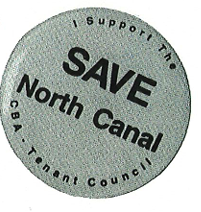
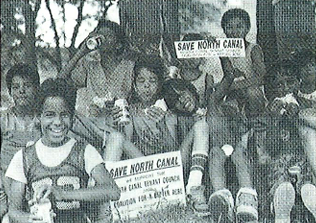
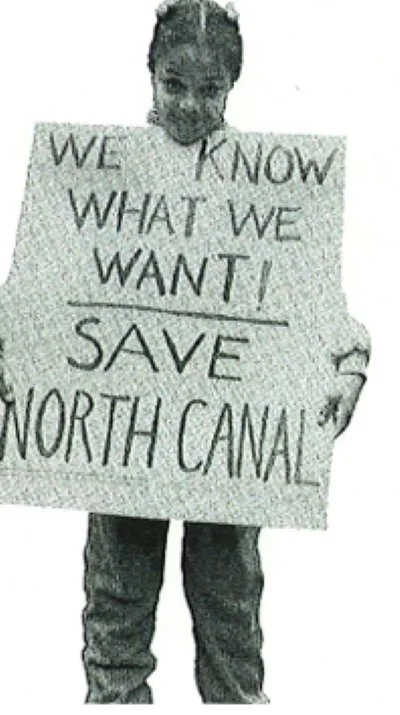
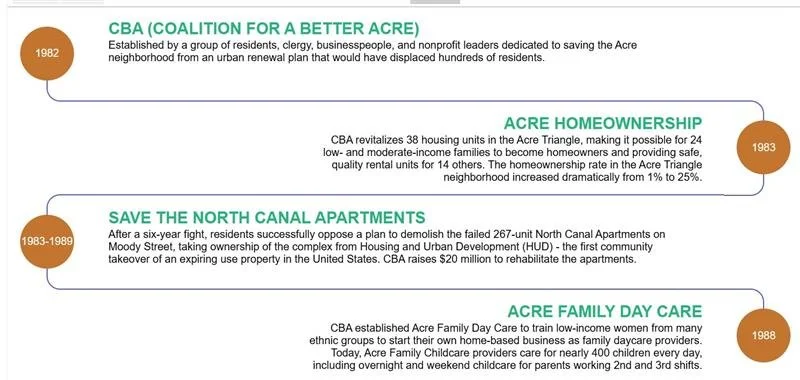
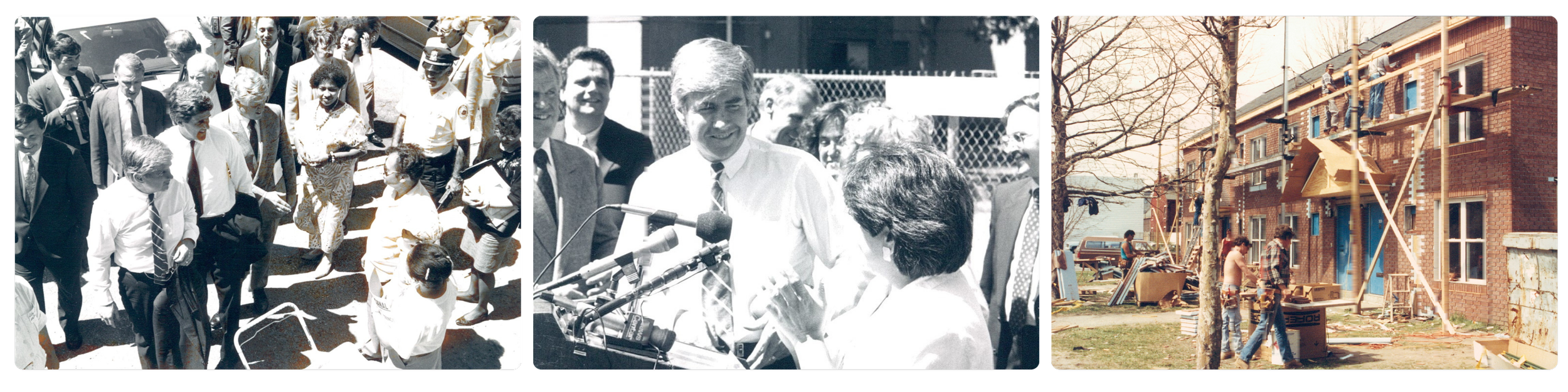
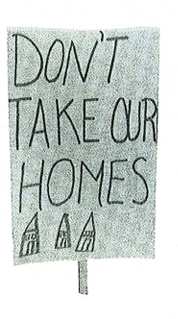
From 1983 to 1989, after a six-year fight, Acre residents successfully oppose a plan to demolish the failed 267-unit North Canal Apartments on Moody Street, taking ownership of the complex from Dept. of Housing and Urban Development (HUD) - the first community takeover of an expiring use HUD property in the United States. CBA raised $20 million to rehabilitate the apartments. Since this historic undertaking, the property has gone through a rehabilitation process and subsequent interior work to ensure units were maintained to the highest quality for the buildings as they stand. With comments from residents and the property management staff, it has been a goal of CBA to reimagine the housing to adopt new building standards and create additional units on the site.
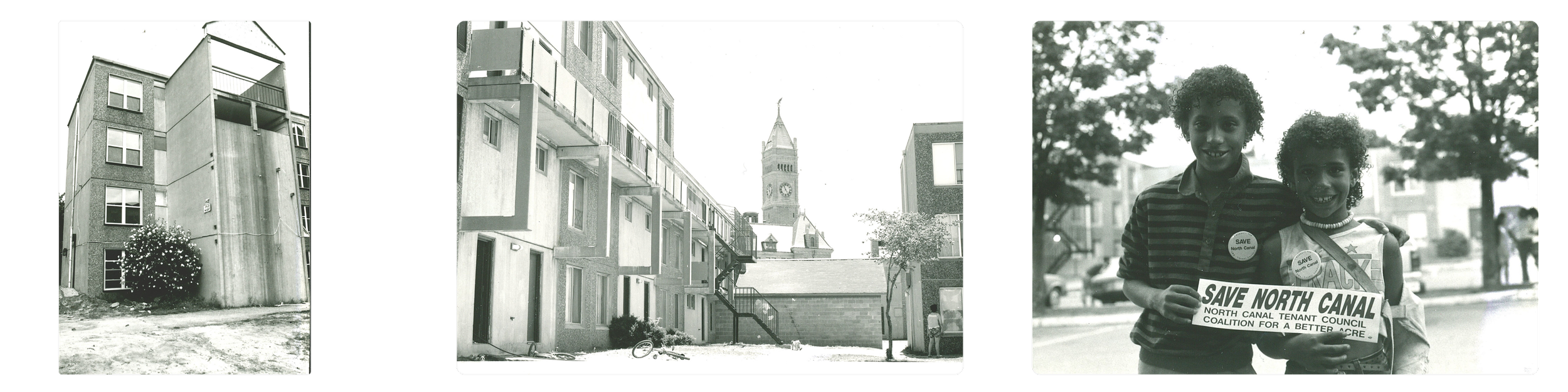
Project Description
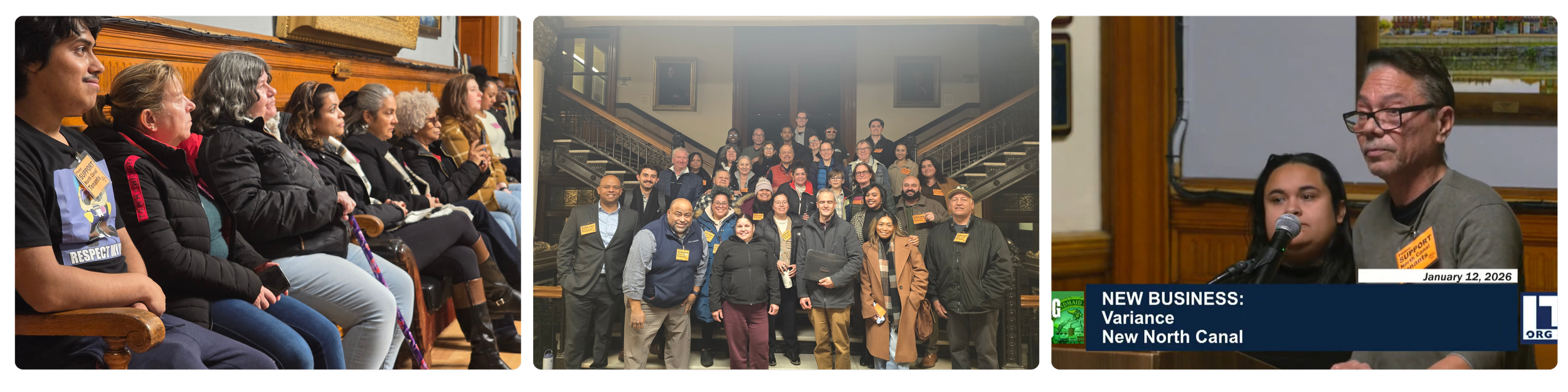
CBA Timeline
〰️
CBA Timeline 〰️
HUD Secretary Kemp, 1989 North Canal Visit
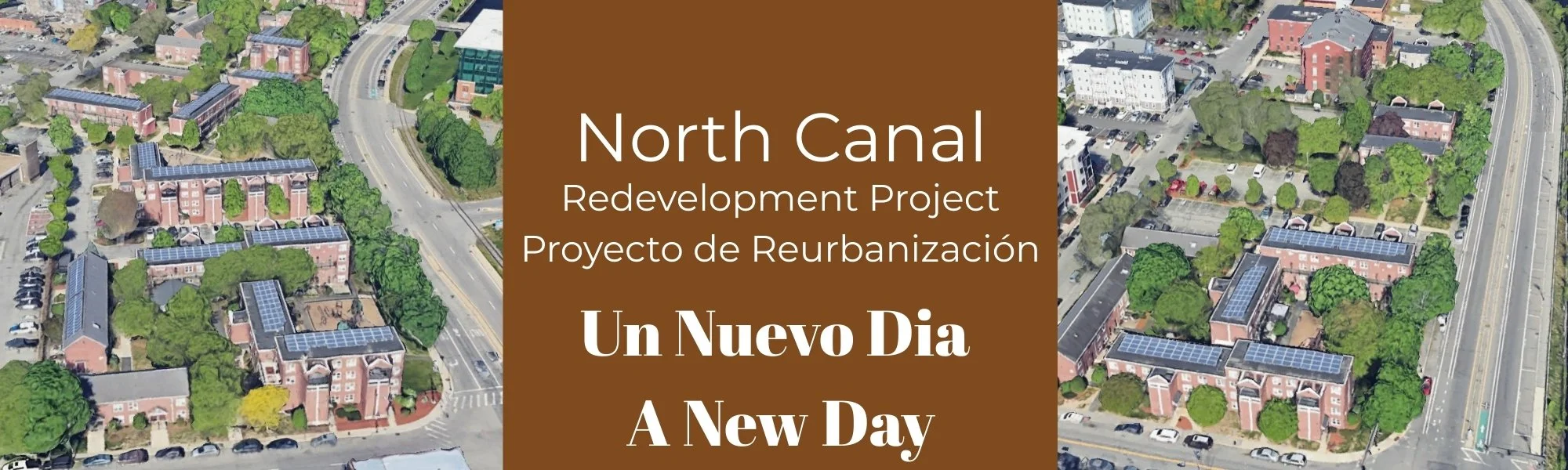
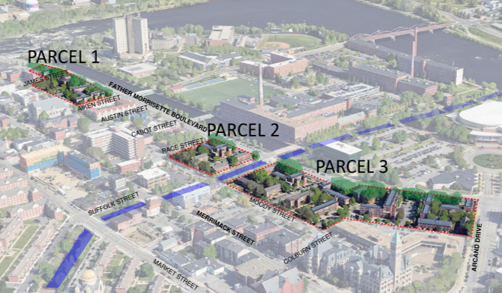
This project is a four-phase redevelopment of the North Canal Apartments. North Canal Apartments are currently 267 units of existing family housing that was built during the 1960’s as temporary housing in downtown Lowell. The housing has reached the end of its useful life, and this project will raze and redevelop the entire site in order to rebuild over 600 units of housing.
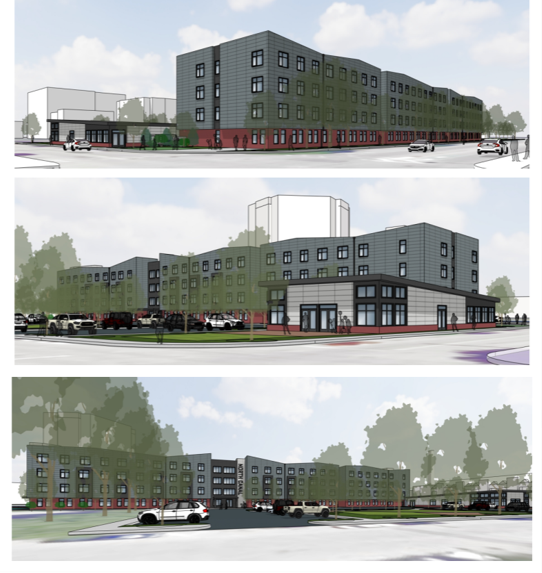
The first phase is a total of 88 units that will serve multi-generational low-income families, with a range from 30-60% AMI. The project has an existing HAP contract which will be transferred to the new building. Phases 1 & 2 are fully permitted. The housing will include supportive services and on-site amenities for indoor fitness spaces, gardening, indoor and outdoor community spaces, office space for property management staff, and supportive services. There is much community and municipal support for the project. There is no adverse community impact by the proposed project, which is set to dramatically increase the housing stock in downtown Lowell.
As of 2024, CBA had worked with the design and property management teams to apply for Federal and State funding for the first phase of construction. The first phase will raze existing buildings at 463 Moody Street, replacing them with 88 units of multigenerational housing. The next three phases will incorporate a new building with 72 more units and lastly two additional buildings of up to 600 units within the current project footprint. These buildings are in the design phase and will be shared with residents through a community charette process.
Construction for each phase of development is planned to take between 18 and 24 months. This includes relocation services for all existing residents. The team at CBA will be applying for State funding throughout the construction of each phase. As we work to secure funding for phase one, we will be completing the design of phase two and completing schematics for phase three. This will be an ongoing process through the State’s funding rounds. This process may take up to 10 years from funding through construction of each phase.
CBA’s goal has always been to develop the property with no displacement of current residents. Our team will work with the Maloney Property and Judy Cohen (Relocation Specialist) teams to ensure that residents are taken care of throughout this process. Relocation will start ahead of phase one construction. We will update the Tenant Council about all relocation conversations.
Post construction at each phase, there will be a lease up process managed by Maloney Properties. The relocation specialist will also work with tenants as units become available. This will be an ongoing process across all stages. A lottery will take place for each phase; prospective applicants will work with Maloney Properties through the application process.
Learn more: North Canal Redevelopment Un Nuevo Dia / A New Day
-
CBA has been working on designs and funding applications since 2024. This process will have distinct phases for each site of construction and will be ongoing as the organization applies through the State funding rounds for tax credit allocation and other subsidies. Each site represents a different schedule that will be funded at separate times based on funding availability at the State level. Each project will be worked on simultaneously through design, construction and lease up. The schedule will be as follows:
Predevelopment:
Site One: 2025-2027
Site Two: 2026-2028
Site Three: 2027-2029
Construction:
Site One: 2028-2030
Site Two: 2029-2031
Site Three: 2030-2032
Lease Up:
Site One: 2030
Site Two: 2031
Site Three: 2032
-
This section will be updated as designs and approvals from the City and State are gained for each phase of construction. As of 2026 sites one and two have moved through the permit approval process for the Zoning and Planning boards at the City of Lowell. The project team has presented at the Historic Board and will be seeking approval in the March 2026 meeting.
-
Frequently Asked Questions
-
The full redevelopment of North Canal will be split into three phases that will each have their own construction costs. We are currently working on the first phase of construction which consists of 100 units of senior housing at 463 Moody Street. The total development costs for this phase will be around $62 million dollars. Right now, the project team doesn’t have full development costs for the rest of the phases but will update the site as development plans come together.
-
Timing is based off of when the project will be awarded funds in the State’s funding application rounds. Phase one development has been invited to apply in the Fall 2026 funding round which would put funds in hand Spring 2027 and construction starting Spring 2028. The plan for the rest of the phases is to apply in each years Winter funding round with the State, starting with Winter 2026 for phase two. Typically, a project takes two years to get funded and another year after to break ground. On that schedule, phase two will break ground 2029 with phase three starting 2030.
-
We are working with a relocation specialist that will be proposing a plan for both on and off-site relocation. CBA is committed to zero displacement for existing tenants, that means that the project will be paying relocation benefits for eligible tenants. There will be more information and correspondence with the relocation specialists as construction gets closer.
-
Lease up for each phase will begin a few months ahead of construction close out. With the first phase being Senior housing there will be an added measure of certification but as the other family units come online in the other phases of the project there will be a standard lease up process compared with other LIHTC properties.
-
You can contact [email protected], or call (978) 452-7523, for more project information from CBA, if there are specific questions from current tenants at North Canal you can reach out to Maloney Properties.
-
ICON Architecture:
Hancock Associates:
https://www.hancockassociates.com/
Aberthaw Construction:
Offshoots Design:
Staengl Engineering:
https://staenglengineering.com/
Judy Cohen:
-
The project is funded through a combination of Federal, State, and local funding. Below you will see the approximate funding sources:
Equity Total phase
Federal LIHTC equity $26,327,156
Solar credit equity -
State LIHTC equity $13,650,000
Deferred fee $962,169
Debt Total phase
State soft funding $8,500,000
Local soft funding $1,750,000
($750,000 Committed by City of Lowell)
Energy efficiency funding -
Seller Note $3,226,994
First mortgage loan $7,113,143
Total permanent sources $61,529,462
Construction loan Total phase
Construction loan (private) $44,500,000
Bridge loan (MassHousing) $6,912,151
Equity
Federal LIHTC equity: $26,327,156
Solar credit equity: -
State LIHTC equity: $13,650,000
Deferred fee: 962,169
Debt
State soft funding: $8,500,000
Local soft funding: $1,750,000 ($750,000 Committed by City of Lowell)
Energy efficient funding: -
Seller Note: $3,226,994
First mortgage loan: $7,113,143
Total permanent sources: $61,529,462
Construction loan:
Construction loan (private): $44,500,000
Bridge loan (MassHousing): $6,912,151
With some time to work, the NCTC grew in numbers and sophistication and worked to win a number of Important struggles at North Canal. With the help of the CBA organizers, the group won a series of concessions from the management company on needed repairs and increased security.
Tenants and CBA leaders used this time to work with consultant Achtenberg to forge a comprehensive redevelopment plan for the project. A series of project meetings were held where CBA staff outlined the potential scenarios for CBA Tenant ownership of the project. The plan outlined a $10-15 million dollar repair program and a guarantee of permanent affordability.
Tenants and CBA leaders began a campaign to “market” their plan to supporters and other sympathetic parties in the state. Early support from the Campaign for Human Development and the Episcopal City Mission helped fund the CBA’s continued organizing work on the project. A small grant from the Commonwealth of Massachusetts helped the CBA pay for the continued services of consultant Achtenberg.
Back in the Acre Triangle, the CBA was breaking ground on their 38-unit Acre Triangle Homeownership Project. Successful completion of this $3 million scattered site development would provide the organization with the development track record to tackle the North Canal redevelopment.
Read more about the history here: The Campaign to Save North Canal

Forging Partnerships for Affordable Housing
North Canal Tenant Council
History